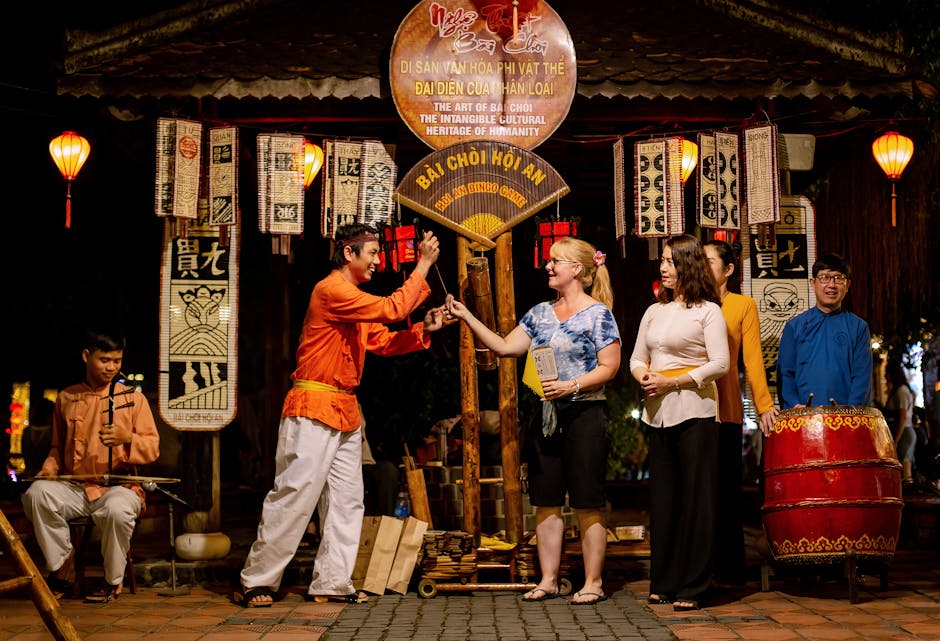
Why Cultural Exchanges are Crucial for Global Understanding in 2026
The world of 2026 feels both vast and intimately connected. Rapid advancements in technology have allowed us to communicate across continents in the blink of an eye, yet this digital closeness often lacks the depth of true human connection. Amidst this paradox, cultural exchanges emerge as beacons of genuine understanding. They hold the potential to bridge distances not just physically, but emotionally and intellectually. Here’s why these exchanges matter now more than ever.
Building Bridges Through Language
Language learning has always been at the core of cultural exchanges. In 2026, programs like the Global Linguistic Exchange have reported a 30% increase in participants over the past five years. Whether it’s students spending a semester in Florence mastering Italian, or professionals honing their Mandarin in Beijing, language acts as the first step towards mutual understanding.
Consider the story of Maria, a young engineer from Mexico, who spent six months in Japan through a cultural exchange program. As she learned Japanese, she not only gained a new linguistic skill but also discovered subtleties in Japanese culture—like the importance of bowing and gift-giving—that textbooks could never capture. Such experiences are invaluable for fostering empathy and reducing cultural stereotypes.
Traditional Arts in Modern Times
Art and culture are timeless vessels of expression. They offer a window into a society’s soul. In recent years, cultural exchange programs have increasingly focused on traditional arts. For example, the International Folk Arts Festival in Santa Fe, New Mexico, has become a melting pot of global creativity. Artists from over 60 countries gather each year, sharing their crafts with audiences of diverse backgrounds.
These interactions are not mere exhibitions; they are opportunities for collaboration. In 2025, a collaborative piece between textile artists from Ghana and Navajo weavers was not just a cross-cultural masterpiece, but also a symbol of shared human heritage. This kind of artistic fusion highlights our commonalities while celebrating our unique differences.
Understanding Global Challenges Together
Our planet faces numerous challenges, from climate change to public health crises. Solving these issues requires not only scientific collaboration but cultural understanding. This year, the World Environmental Exchange Program brought together young leaders from 50 countries to discuss sustainable practices.
Through shared environmental projects, participants learned to appreciate varying perspectives. For instance, a participant from Bangladesh shared techniques of traditional floating gardens to combat flooding, while a Canadian counterpart introduced renewable energy solutions suitable for colder climates. Such exchanges nurture a sense of global responsibility and cooperation, crucial for tackling worldwide issues.
Culinary Exchanges: A Feast for the Senses
Food transcends language barriers and can be a powerful tool for cultural exchange. The International Food Exchange, which started in 2023, has since grown into a global phenomenon. Chefs from different corners of the world swap places, exploring each other’s culinary landscapes and bringing back flavors and techniques to their home countries.
Last year, Chef Anjali from India and Chef Lars from Sweden participated in a month-long exchange. Anjali introduced the use of Indian spices in traditional Swedish dishes, creating a sensation back home. Conversely, Lars incorporated Nordic preservation techniques into Indian cuisine. Their experiences highlight food as a gateway to understanding and appreciating cultural nuances.
Fostering Peace and Tolerance Through Education
Education remains a cornerstone of cultural exchange programs. Initiatives like the Student Peace Exchange have seen record participation, with over 100,000 students engaging in cross-cultural education annually by 2026. These programs aim to plant seeds of peace and tolerance in young minds.
Through shared classrooms and living situations, students learn to view the world through lenses other than their own. They gain firsthand insights into geopolitical issues that are often portrayed through biased narratives. By living and learning together, they form bonds that transcend borders, laying the groundwork for a more peaceful future.
Practical Takeaway: Embrace Cultural Exchange Opportunities
For those eager to enhance their understanding of our interconnected world, cultural exchanges offer a profound way to do so. Whether through language, arts, environmental projects, culinary adventures, or educational programs, these experiences foster empathy, broaden perspectives, and cultivate a deeper understanding of our shared humanity. As travel opens doors to new experiences, seize every chance to engage with the world through cultural exchanges. They are not just journeys but lifelong transformations.